Saturday, February 3, 2024

Good Memoirs: Year of Yes and Country of the Blind (And Some Bad Ones)

I have often whined about not liking memoirs--but I continue to read them and even like some. Since I've read four memoirs in the first month of 2024, I thought I'd ruminate on what makes a memoir good or bad from my perspective. 

The Good

In The Country of the Blind: A Memoir at the End of Sight,  Andrew Leland does not confine himself to looking inward, as so many memoirists do. He does certainly examine the impact of his vision loss due to retinitis pigmentosa on how he lives his life, interacts with people, and thinks about his identity--and he does so in a thoughtful manner. But he also looks outward to the experiences of other visually impaired people, as well as to assistive technologies and medical treatments that have been developed or are being tested. There's much to be learned as well as much to think about. In the former category, among other things,  I learned a lot about the use and learning of Braille and about the development of assistive technologies by blind people themselves, who often have not gotten the credit for their inventions, which have gone on to find wide applicability among the sighted population as well. In the latter category: Is blindness defining when it comes to identity or simply incidental? How is it that the male gaze continues to be relevant when we are talking about blind men? What can we learn about intersectionality and discrimination in its many forms by considering the varied thinking of blind people who are also black, female, and/or LGBTQ?  Well worth reading. 

I never intended to read Year of Yes: How to Dance It Out, Stand in the Sun and Be Your Own Person by Shonda Rhimes. The subtitle in particular sounded like a gimmicky quasi self-help book by a celebrity. But then it was available on Libby and I needed something to listen to while taking my daily walk and I actually liked it a lot. Rhimes was a highly successful TV creator and single mom when her sister shocked her by complaining that she never said yes to anything. She realized her sister was right and decided to say "yes" to every intimidating, scary offer that came her way, from giving a commencement speech at her alma mater to going on Jimmy Kimmel. As she took on these challenges, she also recognized she needed to expand her thinking about saying yes to include saying yes to her family, to herself, and to saying no not out of fear but out of conviction. It gave me a lot to think about, which for me is what makes a memoir worthwhile. Plus, Rhimes is funny!

The Not-So-Good

Reinforcing the idea that subtitles can be important: While a subtitle pushed me away from Year of Yes until I was desperate for a book, the subtitle of The Crane Wife: A Memoir in Essays by CJ Hauser intrigued me. Based on my understanding of the essay form, I thought a memoir in essays would surely offer interesting insights. Um, no. First of all, the book starts with a long section of anecdotes about the love stories of Hauser's progenitors, no resemblance to what I expect from an essay. This is followed by a series of what I guess are essays; I did enjoy pieces about Hauser's responses to The Philadelphia Story, The Fantasticks, and The X-Files, even though I wearied of everything being run through a lens of Hauser's love life. Did she have nothing else in her life but failed relationships? Then, near the end of the book, she concludes a piece by saying "If you are waiting for me to tell you how the story of my going to the fertility clinic comes together with the story of the man who drove me through the park in lilac season with the story of whether or not I want to keep my teats, you are missing the point."  And she goes on to blame any reader dissatisfaction with her approach on the reader's misapprehension of "what has to happen in a story." I go on to conclude there really just isn't a point. 

I received John Stamos's memoir If You Would Have Told Me as a Christmas gift;  I wouldn't have picked it up on my own, but I did read it and don't regret it too much, as it's a quick read. It actually starts with a nice anecdote about driving in LA drunk, with people in other cars yelling "Uncle Jessie, pull over." When I recounted this story to my son and DIL, they both thought it sounded highly unlikely. And, sadly, Stamos didn't provide any real insight into addiction and recovery. Mostly, he talked about famous people (especially the Beach Boys) he knew--and he threw his ex-wife under the bus. There's nothing to ponder or take away. It's one of those memoirs that makes the reader ask, "Why did you think this was worth writing?" 

Favorite Passages

I found that the experience of blindness encompasses both tragedy and beauty, the apocalyptic and the commonplace, terror and calm. This is true of most of human experience: the same can be said of the process of aging, or of dying. In the end, I found that the separation between the blind and the sighted worlds is largely superficial, constructed by stigma and misunderstanding rather than any inherent differences. If we could remove the misperceptions people have about blindness--the image of it as a place of fear, claustrophobia, infantilization, and fundamental otherness--the landscape would begin to look very different. The two worlds would cease to feel so distinct, and their overlapping zones would grow. Ultimately, they'd have to yield and concede and share territory. The blind belong to our world, and we belong to theirs. It's the same world. 

    --Andrew Leland, The Country of the Blind

When you negate someone's compliment, you are telling them they are wrong. You're telling them they wasted their time. You are questioning their taste and judgment. You are insulting them. If someone wants to compliment you, let them.

    --Shonda Rhimes, Year of Yes


Wednesday, December 27, 2023

Favorite Covers of 2023

Since in 2023 I've only posted about a few favorite books each season, it doesn't seem like anyone needs a "Best Books" post from me, so I decided to wrap up the year by sharing some book covers I really liked. A few years ago, the trend in covers seemed to be stripes, which can still be seen now, but less frequently. Current trends I've noticed are flowers; women depicted from the back; close-ups of women's faces; a red, purple, or other vivid sky; or a creepy house seen from a distance. These trends are probably influenced by the fact that I read a LOT of mysteries.  Two  of my favorite covers of the year do fall into these trends; I think I particularly like them because of the saturated colors. 


Here are a few others I liked; they don't necessarily have a lot in common except, perhaps, strong graphic elements:


It's often somewhat difficult to figure out what a cover--even a cover I like--has to do with the book within, but here are a few favorites that did link to the content.


I am sometimes amused or perplexed by the changes in covers from one edition to another. The pair below I can understand, as the original cover is not appealing to me (and I'm old so images of old people should resonate with me). The second one (used for the audiobook) still manages to convey age without frightening anyone (perhaps it's my long, scruffy beard prejudice). 


Finally a mini rant--if I were the designer of a lovely cover, I would hate for it to be obscured by meaningless blurbs or "seals" indicating what awards the book has won. How much better would these two books look without those distractions?


Would love to see some other folks weigh in on their favorite covers of 2023. For favorites of design professionals, see https://lithub.com/the-138-best-book-covers-of-2023/. 


Wednesday, December 20, 2023

Remarkably Bright Creatures, Absolution, and a Few Other Fall Favorites


Yikes! I've only got five favorites from fall. I certainly read plenty of books, but most were just pretty good, mediocre, or outright awful. Perhaps I should spend the rest of 2023 reflecting on my book selection process. This idea compels me to say that I often don't like books highly praised by the literati; for example, I could not even make it through the book landing on the most "best of 2023 lists"--James McBride's The Heaven and Earth Grocery Store. And I know that, regardless of what I say here, I will print out LitHub's "Ultimate Best Books of 2023" list (https://lithub.com/the-ultimate-best-books-of-2023-list/) and plod my way through a number of those I haven't yet read. Some people never learn. 

Anyway, here are my favorite books of fall; may Winter 2024 bring more great reading!

A book group friend loaned me Remarkably Bright Creatures by Shelby Van Pelt last spring. It sat on my nightstand all summer and into the fall--I just couldn't deal with a book in which an octopus was a character (sentient animals aren't my favorites--I hated The Art of Racing in the Rain with a passion). But I finally decided to give it a try so I could get the book back to its owner and, to my surprise, I really enjoyed it. The octopus, Marcellus, charms, as he intervenes in the lives of two people who work in the aquarium where he lives--the widowed Tova, who is still grieving the loss of her son 30 years ago, and Cameron, a 30-year-old who hopes to find and extort the father he has never met. The book is rife with coincidences and is far from believable, but it delights nonetheless.

All the Sinners Bleed is the third of S.A. Cosby's books (often classified as mysteries but definitely more than that) and it is definitely my favorite. The protagonist is Titus Crown, a former FBI agent who has returned to his Virginia hometown and become sheriff. A school shooting incident morphs into the shooting of a young black man by two white deputies and then into the discovery of a trio of serial killers, one of whom remains at large. As Titus pursues the psychopathic killer, he deals with racism, pastors with a range of ulterior motives, the effects of abuse, a rat on his staff, and personal demons. The story is dark and violent and features a great deal of evil, but Cosby illuminates problems worth examining. 

Absolution, by Alice McDermott, is set in the early days of U.S. involvement in Vietnam, when the military presence was relatively small and there were many civilian advisors. The main characters are American wives, their very presence in country an indication of the status of the war. Patricia is a young, naive, Irish Catholic bride who wants desperately to have a baby. She is drawn into the "cabal" of Charlene, a "Waspy" and yet sexy mother of three who runs a variety of money-making operations, some legal, others exploitative of Vietnamese women, ostensibly to benefit a variety of charitable activities, none of which are very useful to the recipients. Indeed, Charlene's last effort to "help" is a disaster. The story is told in the form of letters exchanged between Patricia and Charlene's daughter Rainey, many years later, with the bulk of the book one letter from Patricia. For me, telling the story from the perspective of these young women makes it different from other books about Vietnam that I have read--and I liked that. 

Amanda Gorman blew us away in 2021 with her inaugural poem "The Hill We Climb." Her book Call Us What We Carry shows her growing as a poet, trying new forms, alluding to classical and contemporary literary works, and dealing with challenging historical and current content. It's impressive and well worth reading, even though you, like me, may not resonate with all of the work. One of my favorite poems in the collection has a hopeful tone (not necessarily characteristic of the collection as a whole):

Every Day We Are Learning

Every day we are learning
How to live with essence, not ease.
How to move with haste, never hate.
How to leave this pain that is beyond us
Behind us.
Just like a skill or any art,
We cannot possess hope without practicing it.
It is the most fundamental craft we demand of ourselves.

I also felt this excerpt from a very long poem titled "The Truth in One Nation" very moving:

Every second, what we feel
For our people & our planet
Almost brings us to our knees,
A compassion that nearly destroys
Us with its massiveness.
There is no love for or in this world
That doesn't feel both bright & unbearable,
Uncarriable.

You know I love a chef's memoir; I also am a huge Top Chef fan, so it's predictable that I would like Savor: A Chef's Hunger for More, by Fatima Ali with Tarajia Morell. Chef Fati was a talented, driven, late-20s Pakistani-American chef when she appeared on Top Chef in the Denver season. Shortly after appearing on the show, she was diagnosed with an aggressive cancer; when rigorous treatment failed to stop the  cancer's progress, she was given one year to live and vowed to complete her gustatory bucket list in that year, traveling to all the world's best restaurants. But then her health deteriorated even more rapidly than expected, making such a trip impossible, and she decided to write a book about her life, hoping that the story of her struggles would inspire young Pakistani women, prompt interest in Pakistani cuisine with a goal of alleviating hunger in her home country, and perhaps nudge that country toward changing its attitudes toward gender relations and identity. The book  is composed of stories she shared with her collaborator in an intense week while she was essentially on her death bed, other writing she had done earlier, and chapters written by her mother. Her mother's participation is brave, in that Fati, while celebrating her close relationship with her mother, is also brutally honest about ways in which her mother (and father and stepfather) failed her. Morrell has done a marvelous job putting the pieces together in a way that gives us Fati's story in context. 


Favorite Passages

Humans. For the most part, you are dull and blundering. But occasionally, you can be remarkably bright creatures. 

Shelby Van Pelt, writing as Marcellus the octopus in Remarkably Bright Creatures, by Shelby Van Pelt


It occurred to him that no place was more confused about its past or more terrified of the future than the South. 

--S.A. Cosby, All the Sinners Bleed

Saturday, November 25, 2023

Rants, Thoughts, and Amusements: Also a Poet, A Country You Can Leave, the autism spectrum in books, and Death Watch

The random notes I insert before my seasonal favorites are getting longer as the year progresses. Am I just getting cranky, making bad choices, or what? Anyway, I had so many curmudgeonly observations by Thanksgiving, I decided just to do a special ranting/observation post. 

Shouldn't Memoirists Be at Least Slightly Self-Aware?

I've pretty much stopped writing about things I don't like, but I feel compelled to say something about Also a Poet: Frank O'Hara, My Father, and Me, by Ada Calhoun. I had never heard of Calhoun or her father, the art critic and poet Peter Schjeldahl, before picking up this book and didn't know much about Frank O'Hara, but had seen the book on many "best of" lists so decided to give it a try. Calhoun found a box of tapes of interviews her father had done in preparation for writing a biography of O'Hara that never came to fruition and decided to pick up and complete the work herself, in large part (in my view) to demonstrate to her father, who apparently "forgot I was there," that she could do something he couldn't. The biography doesn't happen, although various takes on O'Hara are presented through snippets of the interviews, but the book is mostly about Calhoun's relationship with her father and how she processes it as she works on the book. I started out liking the book but found myself disliking Calhoun with increasing intensity. She is the most parochial of Americans, the native New Yorker (how many times does she have to mention they lived on St. Marks Place--she can't just say they went home, she must say they went to St. Marks Place). Plus, while spilling her guts about many of her emotions, she seems tone-deaf and lacking in any real self-awareness. At one point, she criticizes someone for bragging about disgusting acts. But she herself sounds like she's bragging about her own sexual abuse and promiscuity because she was a "child of bohemians." And, while she catalogs the many ways her father has hurt her, she seems unaware that her response comes across as vindictive. One can only hope that the success of this book will obviate the need for more memoir from Calhoun!

Does a Bad/Unsatisfying Ending Ruin a Book You Were Otherwise Enjoying? 

A few years ago, I read an article that said endings don't matter (https://entertainment.time.com/2012/01/04/the-nonsense-of-an-ending-in-defense-of-the-middles-of-books/), and while I agree that the middle of a book is the most important part, a bad ending can definitely kill my enthusiasm for a book. Such was the case with the coming-of-age novel A Country You Can Leave, by Asale Angel-Ajani. I am perhaps being too picky, as I like the idea I think she's trying to convey in the ending, I just think the way she did it was too abrupt with a metaphor that didn't work for me. 

Should Being on the Spectrum Be a Source of Humor? 

In recent years, I've noticed many more protagonists who are neurodivergent or who have mental health issues such as anxiety or depression. On balance, this is a good thing--representation matters. But when being on the autism spectrum, for example, is played for laughs, it bothers me. There's a thin line between gentle wit that illuminates and humor that to me feels wounding. Eleanor Oliphant Is Completely Fine and The Rosie Project are two popular books that for me crossed the line, leaving me feeling uncomfortable. To convince myself that I'm not being totally judgmental, I did love Extraordinary  Attorney Woo, a Korean TV series about a brilliant young woman who is on the spectrum. I can be convinced I'm wrong about this!

What's the Most Bizarre Premise of Fall (So Far)? 

Death Watch, by Stona Fitch, is about a watch that actually kills its wearers at random times. Yet people buy it, paying $50,000--and they continue buying it after it starts killing people. What?


Wednesday, September 20, 2023

Favorite Reads of Summer 2023


I'm wondering about myself a bit because lately it seems like many of the books I like are true stories of personal trials, including illness and death. There are even books in this genre that I liked but didn't put on the favorites list (The Invisible Kingdom: Reimagining Chronic Illness, by Meghan O'Rourke). I tell myself this has something to do with my advancing age and the need to understand mortality--but I'm not sure that's it. After all, I loved Death Be Not Proud when I was a teenager. So . . . 

Couple of side notes:

  • Favorite title of the season: You Made a Fool of Death with Your Beauty. It sounded so intriguing, so potentially deep, but despite the fact that some reviewers suggested author Akwaeke Emezi "reimagined the love story," it was just a love story--and one that was a bit "eww" at times.
  • Although I didn't love Parable of the Talents, by Octavia Butler, I was impressed by how prescient she was. Her character Andrew Steele Jarret and his supporters were so Trumpian it was creepy. And the book was published in 1998, before most of us could have imagined the horror.
  • Weirdest premise of the year to date belongs to One's Company, by Ashley Hutson, in which the survivor of a horrific crime wins the lottery and uses her winnings to build a replica of the sets of Three's Company, where she lives in isolation, pretending to be each of the characters for a year. 
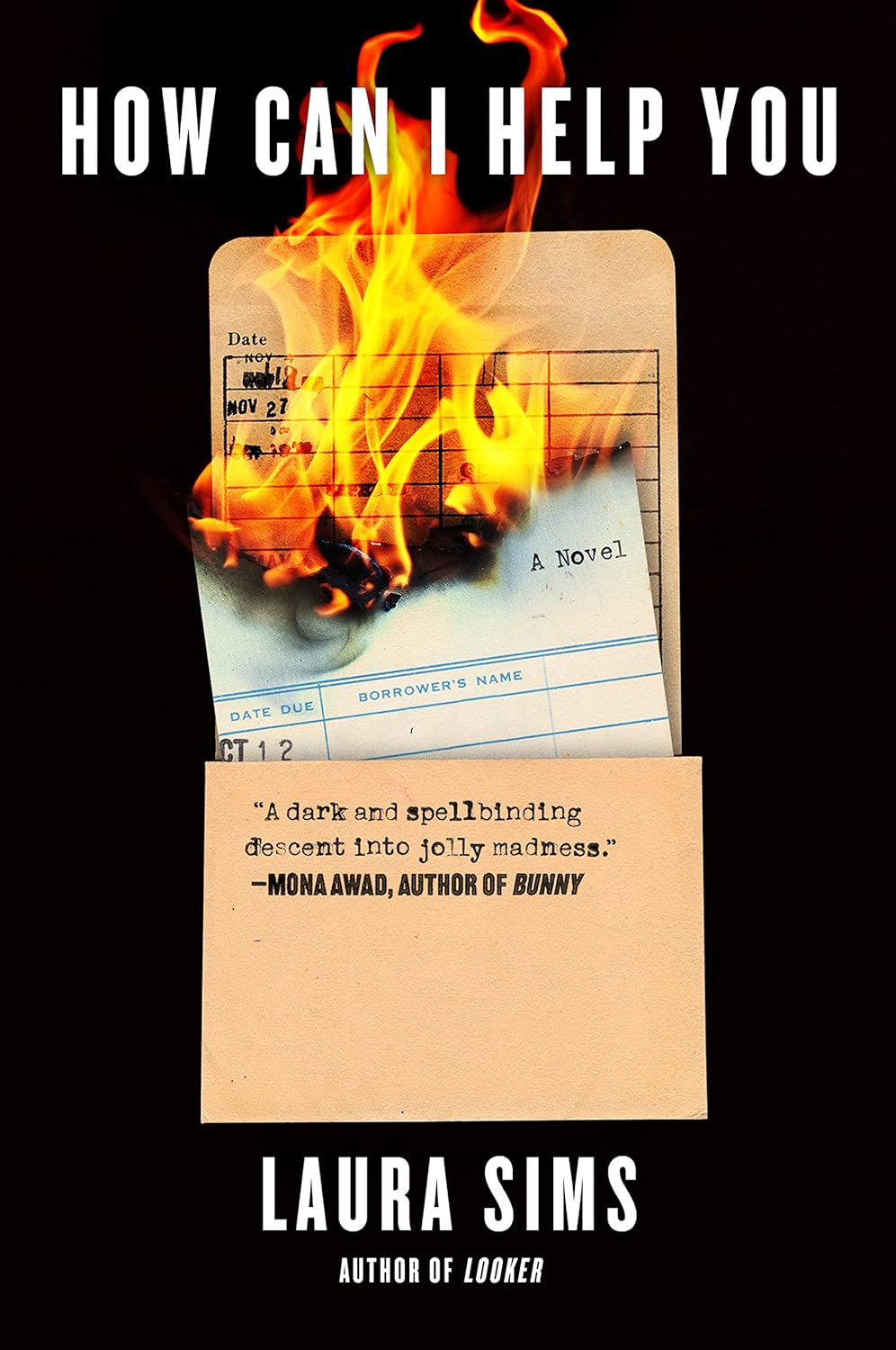
  • Couldn't help wondering what my librarian friends would think of the premise of How Can I Help You? by Laura Sims, in which a serial killer/nurse hides out as a librarian.  (You can guess, at least in part, how that goes.)

Anyway, here are my favorite summer reads:

Fiction

I've already written about  Ann Patchett's Tom Lake so I'll just repeat here that I loved it.

The subtitle of Erica Baumeister's new book, No Two Persons, proclaims it to be a novel, but she describes it as interlinked short stories. I think it's somewhere in between because the short stories add up to something that isn't a novel--but is just as good. And my different take is proof of the point she's making--people see books differently, but the books keep their power. No Two Persons opens with a young writer, recovering from a family trauma and struggling to bring the boy who has appeared to her to life in words. It then moves to a young mother who reads manuscripts for a literary agency in her "spare time" and to the narrator of the audiobook, an actor who has turned to voice work because of a skin condition. We then meet a series of people who encounter the book--some read it and are moved, some don't read it but still are affected (an artist turns the pages into wings for a "found art" sculpture she is making). 

Late Bloomers, by Deepa Varadarajan, may not be the deepest book, but it is an enjoyable one. It's narrated by four members of an Indian American family: Suresh (father) and Lata (mother) Raman, who divorced after nearly 40 years of (arranged) marriage, and their children Nikesh (son), a lawyer and father, and Priya, their professor daughter. Both children are keeping secrets from their parents, who are, in very different ways, trying to figure out their lives as single people, Suresh through Internet dating and Lata by taking her first job and making new friends there unlike her traditional Indian American married friends. The book is funny while also offering cultural and universal insights. The ending is unusual, in that much is left unresolved, but it feels true to life (and not like a set-up for a sequel, although I could be wrong about that). 

Mysteries

Attica Locke's Black Water Rising is set in the 1980s, with frequent flashes to the protagonist's days as a civil rights activist in the 1960s that ended when an unjust prosecution almost sent him to prison and two friends were killed by the FBI. In the '80s, Jay Porter is a lawyer, a struggling solo practitioner who is about to become a father but has lost his passion. Then he rescues a woman while he and his wife are on a river cruise and all hell breaks loose. Like the protagonists of many mysteries, Jay makes a lot of dumb decisions, but there is real investigation involved and the story has some gravitas, dealing with race and class. It's long for a mystery--400+ pages--but Black Water Rising is worth the investment.

Nonfiction

I've been divorced for 30 years, but I still found much to chew on in Maggie Smith's book You Could Make This Place Beautiful: A Memoir, which is a reflection on her divorce, her marriage, and her life after both. Smith brings her poetic skills to the brief vignettes through which she tells her story--the language is often quite beautiful. Some of the devices she uses (e.g., titling chapters "A Note on . . ." --plot, character, betrayal, etc.) seemed somewhat forced, but others (very brief chapters that pose "unanswerable questions" she is trying to answer) worked well for me. The messages I took from the book are relatively straightforward--it's not worth it to give up yourself to try to save a marriage in which your partner wants you to be someone you're not, you can be happy after divorce--but the thinking she goes through to come to those conclusions is instructive and beautifully rendered.

I found Between Two Kingdoms: A Memoir of a Life Interrupted by Suleika Jaouad an honest, insightful, and moving account of her early-20s diagnosis of leukemia, the incredibly grueling course of the disease and treatment, the pain of losing so many friends who went through treatment with her, the toll on her relationships, and the challenge of returning to "normal" when one is cancer-free (part of her answer was to take a cross-country road trip, shortly after learning to drive, to reach out to people who had contacted her as a result of a column about her illness she wrote for the NYT). I really enjoyed her narration of the audio book. At the end I was touched when I realized the music was by her and her partner. Then she thanked Jon Batiste, and I realized she is the wife whose cancer returned in 2021 and, honestly, that knowledge made the book devastating.

Every few years, someone follows a teacher around for a year and writes a book about the challenges and rewards of teaching. The Teachers: A Year Inside America's Most Vulnerable Important Profession, by Alexandra Robbins is in that genre, highlighting problems that mark education in the 21st century. Robbins, who became a substitute teacher while writing the book, spent a lot of time with three teachers (all in elementary/middle school) and interviewed many others (including high school teachers). While many of the challenges are expected--too much emphasis on testing, inadequate resources, obnoxious/entitled parents, difficulty of balancing work and personal life--I found myself shocked by the description of workplace bullying among teachers. I have worked in education for more than 40 years and I know all teachers aren't nice people, but the extent and venality of the bullying among coworkers described in the book was stunning. If you're a parent or a taxpayer for that matter, it's worth reading this book.

On a more cheerful note, of course I have a food-related book. Although its perspective might not be as unique as editor Zosia Mamet thinks it is, My First Popsicle: An Anthology of Food and Feeling is a delight. It would be worth reading if it only included Andrew Bevan's tale of being broken up with just after taking a bite of a meatball (his essay also comes with a 16-step "recipe" for preparing SpaghettiOs with Meatballs) or Ted Danson's reflections on why chipped beef on toast tastes like cowardice and the loss of innocence. But there are lots of other funny and/or moving pieces by the likes of Richard Shepard (eating at Sukiyabashi Jiro), Rosie Perez (how her Tia's Pollo Guisado helped her survive PTSD from living in a children's home), Kwame Onwuachi (getting stood up when he had made Veal Blanquette for a date), Anita Lo (being tied to dumplings because of her Chinese background), Mari Andrews (the difference between solitary and lonely food), and much more. Loved it!

Poetry

The poems in Clint Smith's Above Ground are reflections on parenthood and how becoming a parent changed his view of everything, from racism to Hurricane Katrina to school shootings to family history. Some are sweet, while others challenge the reader to reconsider personal and public events. "We Have Made It Through Worse Before" is one of the latter, ending with the powerful lines

. . . We are not all left
standing after the war has ended. Some of us have
become ghosts by the time the dust has settled. 

Powerful lines pop out throughout the works:  

"Nostalgia is a well-intentioned wound." 

"I still can't tell the difference between a memory and grief's imagination." 

"I fear everything I cannot control
and know that I control nothing."

Highly recommended.

Favorite Passages

. . . he always, deep down, admired men like King, for whom the ability to love was a gift, like an ear for music. Jay, on the other hand, lived a life of constant struggle against his own cynicism, his well-earned knowledge of the limits of human grace.

He has not slept a solid night in days. Or is it years? He gets mixed up sometimes.

    --Attica Locke, Black Water Rising


The thing about birds: if we knew nothing of jays or wrens or sparrows, we'd believe the trees were singing, as if each tree has its own song.

The thing about this life: If we knew nothing of what was missing, what has been removed, it would look full and beautiful. 

    --Maggie Smith, You Could Make This Place Beautiful: A Memoir


For the person facing death, mourning begins in the present tense, in a series of private, preemptive goodbyes that take place long before the body's last breath.

Grief is a ghost that visits without warning. It comes in the night and rips you from your sleep. It fills your chest with shards of glass. It interrupts you mid-laugh when you're at a party, chastising you that, just for a moment, you've forgotten. It haunts you until it becomes a part of you, shadowing you breath for breath.

    --Suleika Jaouad, Between Two Kingdoms


Friday, August 4, 2023

Tom Lake

My favorite novel so far this year is Ann Patchett's Tom Lake. Lara (nee Laura), her husband Joe, and her three 20-something daughters are all spending the pandemic at the family cherry orchard in Michigan. It's a lot of work, but it also gives them time together--and time for Lara to tell her girls the story of her relationship with the Oscar-winning and recently deceased actor Peter Duke (one of her daughters went through a phase in which she believed Duke was her father). When she was her daughters' age, Lara had been working as an actress, a job she more or less fell into because she was very good at playing Emily in Our Town. But she realizes fairly early on that you cannot play Emily forever and takes her life in a different direction. Her story--she does edit out some pieces--is about becoming and knowing yourself through good and bad decisions, brief and lasting relationships. And it's a story about love and family and everyday life--just as Our Town is. 

I love "Our Town," so its part in the plot enhanced the book for me--I might have liked the book just as well had a different play been cast in the role (so to speak), but it's hard to think of another play that would have been so perfect for the part. The Cherry Orchard is also referenced, but I don't think I've even read it so those allusions did less for me. 

One of the things that I am chewing on after reading Tom Lake is whether children can ever truly know their parents as people, even if the parent makes a point of telling their story--and to what extent all of us would edit our stories for retelling to our children. Of course, the converse is also questionable--can the parent fully see their children as adults? 

It's also worth noting that if you're Ann Patchett, you can apparently get anyone you want to narrate your audiobook. Tom Hanks did her last book, and Meryl Streep does this one--do I even need to say she does it beautifully? 

Favorite passage:

There is no explaining this simple truth about life: you will forget much of it. The painful things you were certain you'd never be able to let go? Now you're not entirely sure when they happened, while the thrilling parts, the heart-stopping jobs, splintered and scattered and became something else. Memories are then replaced by different joys and larger sorrows, and unbelievably, those things get knocked aside as well. 


Wednesday, June 21, 2023

Favorite Reads of Spring 2023: Recipe for Disaster, a Heart that Works, and More

I have perhaps not been very discerning in my spring reading, but there were some highlights. And here they are.

Fiction

We Are the Light, by Matthew Quick, is written in the form of letters from the protagonist, Lucas, to his analyst Karl. In the letters, he is processing the grief and everything else that follows a mass shooting. Lucas intervened in the shooting (at a local movie theater) and is regarded as a hero by the community, but he feels like a monster who was unable to save his wife. Then the shooter's younger brother sets up a tent in Lucas's backyard and engages Lucas in making a film about the tragedy. The book doesn't shy away from the brutal heartbreak of an event like this, but it still manages to be a hopeful look at the healing power of art and community. 

One Two Three, by Laurie Frankel, is narrated by teenage triplets (ergo the one two three of the title) who live in a town whose health--physical and economic--was destroyed by a chemical company nearly 20 years ago. The girls represent the children of the community--Mab is able-bodied and encouraged to leave town as soon as she graduates, Monday appears to be the autism spectrum (e.g., she eats only yellow foods), and Mirabel is brilliant and severely disabled. The return of the family that owned the chemical company raises numerous issues: Will the town choose safety and justice over economic recover? Can anyone from the family be trusted? What should the girls do? Entertaining and thought-provoking.

I guess if you've read a lot of feminist dystopian literature, Gather the Daughters, by Jenny Melamed, may not seem fresh. Since that's not a genre I've explored in great depth, I found the book interesting (and horrifying). It's set on an island, where the people have escaped from some apocalyptic event on the mainland (AKA "the Wastelands"). But were they escaping? Or was their society simply set up by men who want to dominate women and girls, whose life experiences include being raped by their fathers; running wild in the summers, when adults stay home and children roam freely; and being forced into marriage and childbirth. Because of inbreeding many children are born with problems--and they are immediately killed. Yeah, it sounds grim, but the four girls at the center of the book are smart and brave and well characterized. 

Mysteries

City Under One Roof, by Iris Yamashita, is set in an Alaska town where everyone lives in one high-rise building; the town, reminiscent of the town of Whittier, is only accessible via tunnel (which is closed early in the book due to a blizzard).  Anchorage police detective Cara Kennedy (on leave) arrives in the town after a teenager finds a hand and a foot on the beach; Kennedy thinks the discovery may be linked to the death of her husband and son on a camping trip. The town's residents are an eccentric lot and the plot gets complicated by the introduction of a gang from a nearby Native village, but I enjoyed the characterizations and the unusual setting. 

Nonfiction

I picked up Recipe for Disaster: 40 Superstar Stories of Sustenance and Survival at the library one morning, started reading it when I got home, and didn't stop until I finished. Alison Riley has compiled stories for 40 people, generally folks in various forms of the arts (including the culinary arts), recalling a difficult time in their lives and the food that sustained them. Example contributors: Bowen Yang, Alice Waters, Brian Lehrer, Jacqueline Woodson, Thundercat, Emily King. Some of the stories are funny (Samantha Irby on her breakup recipe); many are touching, bordering on heartbreaking (Simon Doonan on a friend who died of AIDS in the early 80s after trying a macrobiotic diet in hopes that it might help--later research showed it may have made the disease progress faster). While some are individual (young single father Cey Adams searches for somewhere to change his baby's diaper in Penn Station), others deal with larger events--9/11, the AIDS epidemic, the COVID-19 pandemic. And many reference childhood, either positively or negatively. The book is also beautifully illustrated with photographs, some closely tied to stories, others with a more abstract connection, by Grant Cornett. I absolutely loved this book (even though I don't want to try the recipes). 

A Heart that Works, by Rob Delaney, is another book about grief, and it is heart-rending, as it deals with the illness and death of the author's young son. But, surprisingly (at least for those who aren't familiar with Delaney's work, which I was not), it's also profane and, at times, humorous. Delaney says he wrote the book because he wanted to make people understand--and he does a good job of conveying the terrible experience his family went through although I'm not sure anyone who hasn't had the experience can truly understand it. And, unlike many couples who lose a child, Delaney and his wife Leah survived as a couple, which was inspiring. 

Having heard Mary Louise Kelly talking about her new book It. Goes. So. Fast. The Year of No Do-Overs on Kate Bowler's podcast, I thought it was entirely about her year trying not to miss any of her older son's activities during his senior year of high school and dealing with the conflict between home and work during that year and throughout her life as a parent. Although I'm long past my active parenting days, that resonated with me, as I (in a much less high-powered job than Kelly) decided not to travel at all during my two sons' senior years). However, that's only a piece of her reflections on time's passage (and she actually missed one of her son's final soccer games because she went holed up in New England to write the book)--the book is also about aging, reporting (there's detail on her infamous interview with Mike Pompeo), her father's death, anchoring and reporting with significant hearing loss, her younger son's delayed speech, and more (briefly mentioned is the break-up of her marriage). I would actually have liked the book to be closer to my expectations, but I still enjoyed it because journalistic memoirs are inherently interesting to me.

People probably have numerous ideas about Valerie Bertinelli based on her life as a sitcom actress, Food Network personality, former wife of a rock star, and frequent "public dieter," her memoir Enough Already gives readers a much more complex view of who she is--and she's pretty remarkable. I was especially impressed by the way she and Eddie Van Halen kept a positive relationship after their divorce. Her reflections on aspects of her life have also set me to thinking about how I handled facets of my own life. 

Favorite Passages

From Recipe for Disaster:

Are you feeling like a cook now? This is the part where I look around the kitchen, thrilled by the sounds and the smells and low-key in awe that I am the one making those things happen, and break my fucking arm trying to pay myself on the back.

--Samantha Irby

After his [the author's father] funeral . . . food began to arrive. The faces of every elder and ancestor whom I could remember rang the doorbell not to stay, not to speak too much, but to leave a dish knowing it would hold the love they felt for us in every bite. Their faces looked like the ones I remember in Geismarand Denver; they looked like the fces of both of my grandparents. They were faces of my mourning family, smiling at me like my father sitting on the shore, smiing at me without speaking, letting the sunflower seeds fall beneath us. 

--Damani Baker

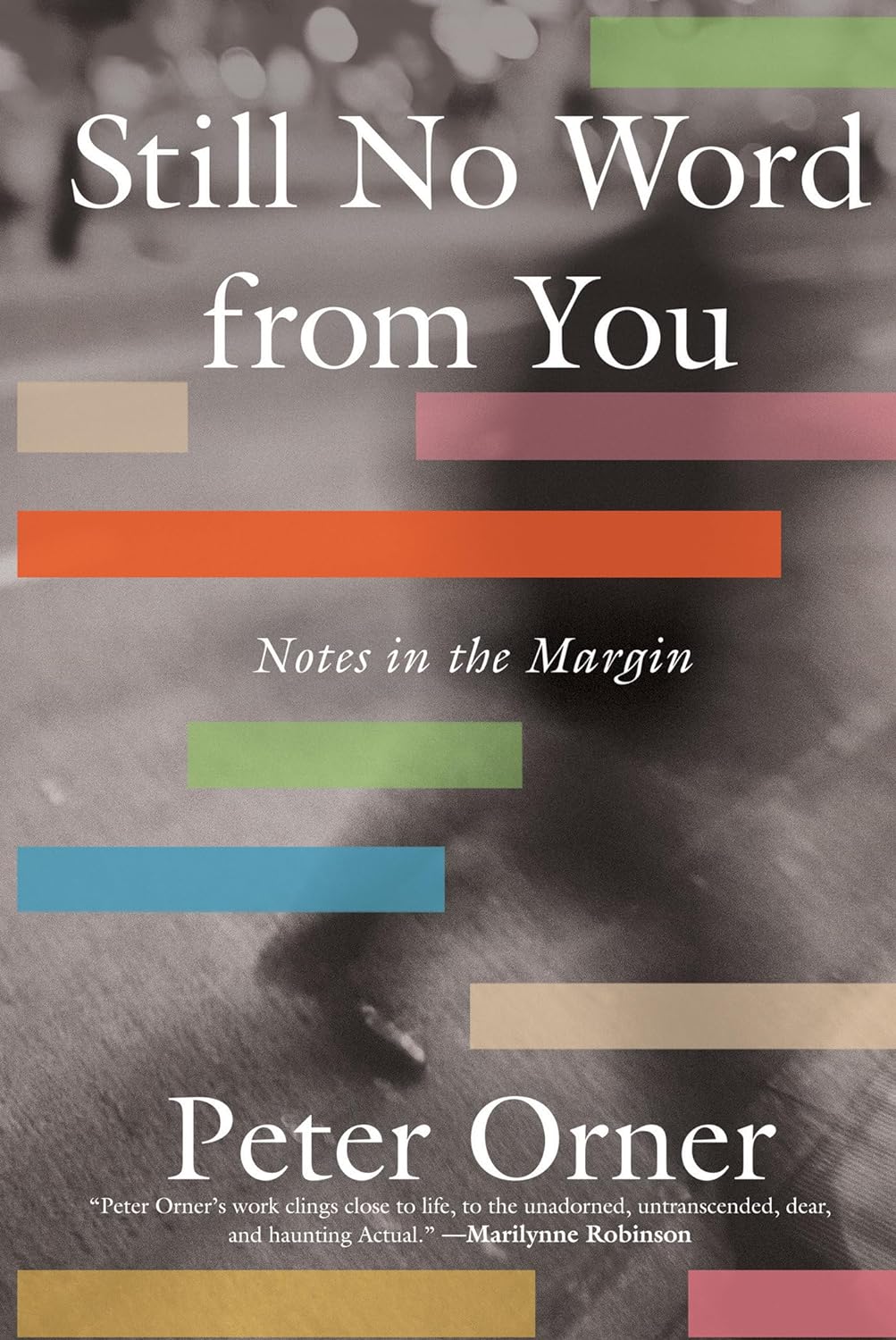
Still No Word from You, by Peter Orner, is a peculiar book, blending memoiristic pieces with brief essays on literary works. Because I'm a very linear thinker, I often couldn't figure out how pieces related to each other. What exactly does Richard Wright's turn to haiku late in life have to do with the pet turtle of the author's brother? Although I couldn't comprehend Orner's point (if he had one), I could appreciate his writing, which is lovely. Some examples: 

In our  house we did eat together, if also alone, at a rough wooden table so small our knees touched. It wasn't for lack of a bigger table. We had a long one in the dining room nobody ever went into. I've written about the kitchen table before. It isn't true that we write stuff out of us. 

There are days I crave the lake, when I look east and there's nothing at all in that direction but trees and unfamiliar mountains. When I was small I'd go down to Millard's Beach and lie in the shallows and let the current wash over me, and I'd put my ear to the bottom and listen to the way the tiny pebbles seethed as they tumbled back and forth beneath the water. We walk the beach where love has taken us, my mother and me. February sun over Lake Michigan. There's no warmth in it. It's fake as varnish.